
Reasons why a pneumatic diaphragm pump cannot pump liquid
The following are some reasons why a pneumatic diaphragm pump may fail to pump liquid:
1. Ensure the pump's inlet and outlet are connected correctly. The inlet should be at the bottom,
and the outlet at the top. Worn parts within the pump body may also be faulty; this is easily resolved
by replacing the worn parts.
2. Insufficient air pressure from the air compressor (normal pressure is 5-7 kg/m³). Alternatively, the
liquid may be too dense or too concentrated, preventing the pump from reaching its suction head.
In this case, the pump will work, but will not pump liquid.
3. Insufficient air pressure at the inlet. Generally, the air pressure range for domestically produced
pneumatic diaphragm pumps is 2-7 kg/m³. Pressures above or below this range will prevent the pump
from operating properly. A poor seal in the liquid inlet pipe may also cause the pump to work normally,
but it will not pump liquid because it cannot draw it in.
4. If the valve ball and seat seal within the pneumatic diaphragm pump body are not properly sealed, the
pumped liquid will immediately flow back. In this case, the pump body will still discharge liquid, but the
flow rate will be very small, and the head will be extremely low.
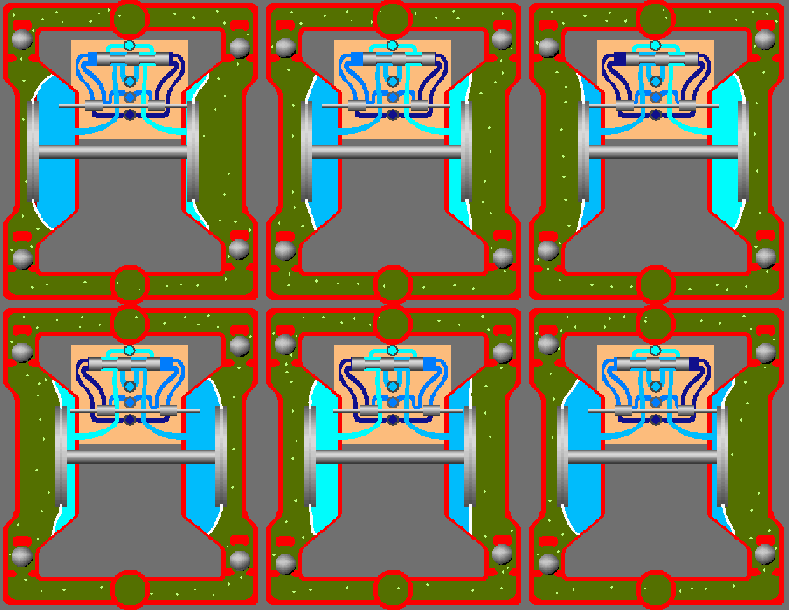
A pneumatic diaphragm pump is a new type of conveying machinery that uses compressed air as its power
source. It can completely pump out various corrosive liquids, liquids containing particles, and high-viscosity,
volatile, flammable, and highly toxic liquids. The diaphragm must have good flexibility and corrosion resistance,
and is usually made of materials such as polytetrafluoroethylene (PTFE) and rubber. The pot-shaped parts with
mesh on both sides of the diaphragm are designed to prevent excessive local deformation of the diaphragm
and are generally called diaphragm limiters. Pneumatic diaphragm pumps have good sealing performance and
can easily achieve leak-free operation. They can be used to transport corrosive liquids such as acids, alkalis, and
salts, as well as high-viscosity liquids.
Post time:2026-01-06
